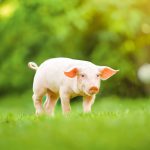
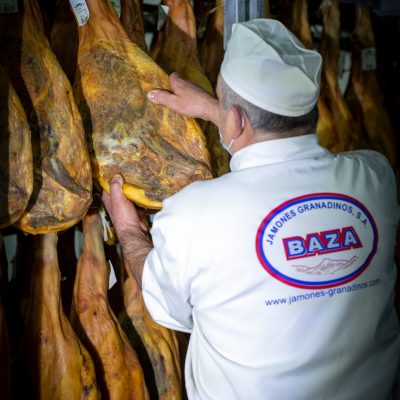
In our pursuit of excellence and our commitment to the environment, Jamones Granadinos has worked closely with our farmers so that every slice of our organic ham carries the heart of nature. Thanks to animal welfare and meticulous care in production, BioBAZA has become a benchmark in organic food.
At Jamones Granadinos our organic production follows the most sustainable practices, with proper waste management and respect for animal welfare.
In addition, the ingredients used in organic products must meet the organic standards set by the competent authorities. The result is high-quality, environmentally friendly products.
The basis of any meat product is the selection of high-quality raw materials. In organic production we focus on meat from pigs raised in grazing systems and fed with organic feed, following specific animal-welfare rules.
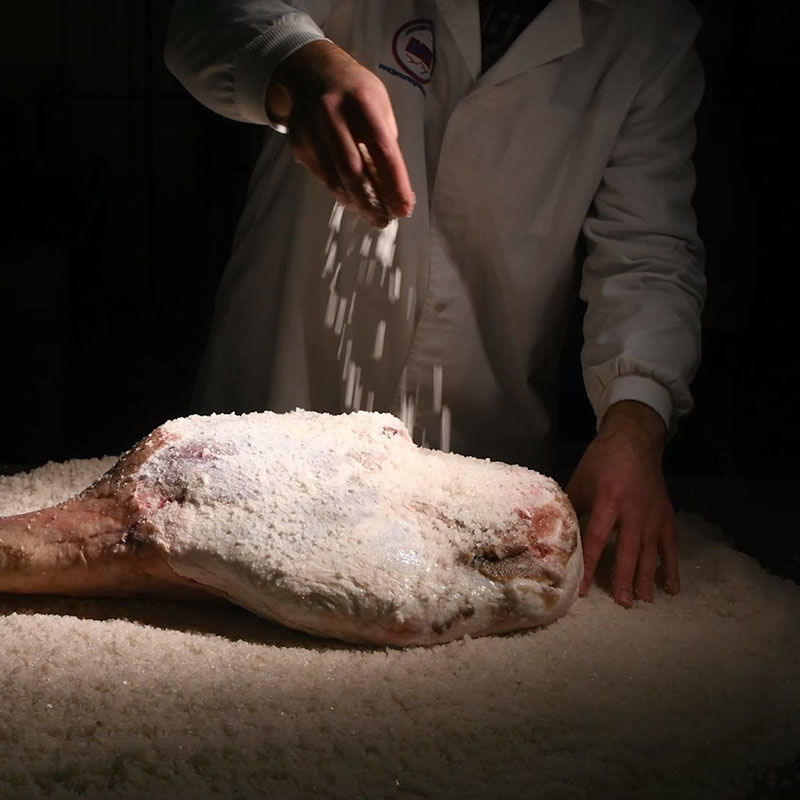
For ham, this is the stage where other additives could be included. We use only sea salt, with no curing agents, colourings or artificial preservatives. For our cured sausages, the meat is prepared only with natural, organic ingredients permitted in organic farming. This stage is key to preservation and flavour development.
Organic ham tends to offer higher nutritional quality, as the pigs are raised in more natural conditions, fed with organic feed and lead a more active life. This can result in leaner meat with a healthier nutritional profile.
Pigs used for organic ham are raised in conditions that respect animal welfare. They have access to outdoor areas, intensive farming and excessive use of antibiotics are avoided, and they receive a quality diet.
Organic production prohibits synthetic pesticides, herbicides and chemical fertilisers in pig feed and on grazing land. The result is a final product with fewer chemical residues and a lower environmental impact.
Organic production tends to be more environmentally sustainable, promoting soil conservation, biodiversity and responsible management of natural resources.
Organic products carry labels certifying their organic origin, allowing consumers to make informed choices and trust the origin and quality of the product.
Organic ham is made from pigs raised in organic systems using environmentally friendly practices. It focuses on nutritional quality, animal welfare and sustainability.
Organic ham comes from pigs raised in more natural conditions, on an organic diet and without chemical pesticides. It also focuses on animal welfare and sustainable practices.
Organic ham tends to offer higher nutritional quality thanks to more natural rearing and feeding. It can be leaner and contain fewer chemical residues.
Look for organic certification labels, such as the EU organic logo or local organic certification marks. These labels guarantee that the product is organic.
In most places these terms are used interchangeably to describe food produced with sustainable, organic practices. There is no significant difference between them in this context.
Organic ham is considered healthier in terms of nutritional quality and the absence of chemical residues. As with any food, it should be enjoyed in moderation as part of a balanced diet.
Shelf life depends on the format and storage method. Always follow the use-by or best-before date on the pack. Vacuum-packed cured sausages keep well in a cool, dry place.
We use cookies to personalize and improve our content and services, display relevant advertisements, and provide a safe experience. You can review the cookie controls whenever you want. Check our Cookies Policy for more information on the use and controls of cookies.
Este sitio web utiliza cookies para mejorar su experiencia mientras navega por el sitio web. De estas, las cookies que se clasifican como necesarias se almacenan en su navegador, ya que son esenciales para el funcionamiento de las funcionalidades básicas del sitio web. También utilizamos cookies de terceros que nos ayudan a analizar y comprender cómo utiliza este sitio web. Estas cookies se almacenarán en su navegador solo con su consentimiento. También tiene la opción de optar por no recibir estas cookies. Pero la exclusión voluntaria de algunas de estas cookies puede afectar su experiencia de navegación.
Necessary cookies are absolutely essential for the website to function properly. This category only includes cookies that guarantee basic functionalities and security features of the website. These cookies do not store any personal information.
Cookies that may not be particularly necessary for the operation of the website and that are specifically used to collect personal data from the user through analysis, advertisements and other embedded content are called non-necessary cookies. It is mandatory to obtain the consent of the user before executing these cookies on your website.